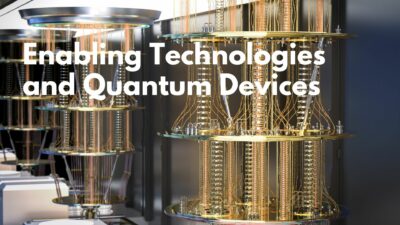
This article from NIST does not describe a formal quantum computing standard or protocol, but rather outlines foundational experimental techniques that will likely shape future industry guidelines. The research focuses on electron spin resonance (ESR), a method used to precisely control individual atoms acting as quantum bits (qubits). Currently, the work is in an active laboratory research phase, with NIST having completed a highly stable, ultra-cold test facility designed to evaluate qubit behavior. No official implementation timeline has been set, but the long-term goal is to resolve critical stability issues before quantum computers can be scaled for commercial or industrial use.
At its core, the technique uses a specialized microscope and carefully tuned radio-frequency signals to flip the quantum states of single atoms without disrupting them. Because quantum information is extremely fragile, experiments require near-absolute zero temperatures, heavy vibration isolation, and custom wiring to block outside interference. By studying how these delicate states break down and testing ways to keep them stable, researchers aim to achieve reliable entanglement between individual atoms. Success in this area could dramatically extend qubit lifetimes, enable highly secure quantum communication, and provide the precise control needed for practical, large-scale quantum computing systems in the future.
Source: https://www.nist.gov/programs-projects/electron-spin-resonance-single-atom-level
Keywords: electron spin resonance, scanning tunneling microscope, qubit coherence