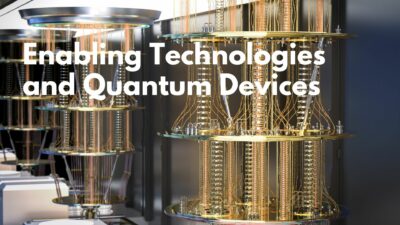
NIST researchers are developing a technical protocol for quantum networks that connects distant systems using trapped ions and optical fibers. Because quantum signals cannot be copied like classical data, the system relies on “entanglement” to share information securely between locations. The team is building specialized nodes where ions act as stable memory units, while photons travel through existing fiber-optic cables to link these units over long distances.
The core technology involves converting signals to a specific wavelength that travels efficiently through fiber, then using a method called entanglement swapping to extend the connection range. This approach could enable future applications like distributed quantum computing and highly precise sensing across large distances. The research demonstrates high-fidelity connections between ions and telecom photons, proving the method works on a small scale.
Currently, this work is in the prototype and testing phase rather than a finalized industry standard. While there is no fixed implementation date, the goal is to establish long-distance quantum links that eventually support large-scale networks. Success here would pave the way for secure, high-speed quantum communication systems that operate independently of the limitations found in classical networks.
Source: https://www.nist.gov/programs-projects/quantum-networking-trapped-ions-optical-cavities
Keywords: entanglement swapping, trapped ions, telecom photons