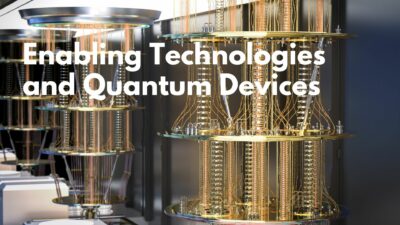
Researchers at NIST and Stanford University have demonstrated a new quantum detector that converts long-distance fiber-optic signals into visible light for more efficient processing. This technology supports quantum key distribution (QKD), which is essential for creating secure, unhackable communication networks. By enabling standard silicon sensors to detect photons at wavelengths that travel best through cables, the device helps overcome the distance and noise limitations that currently restrict quantum internet expansion.
The team achieved this by using a dual-channel system to overcome timing delays, effectively doubling the data rate while maintaining high accuracy. Although the technology is currently in the research phase, it moves quantum hardware closer to practical field use without requiring expensive cooling equipment. This development could support future industry standards for high-speed quantum networks, making long-distance secure communication more viable for widespread implementation.
Source: https://www.nist.gov/itl/upconversiondevices
Keywords: frequency up-conversion, single-photon detectors, quantum key distribution