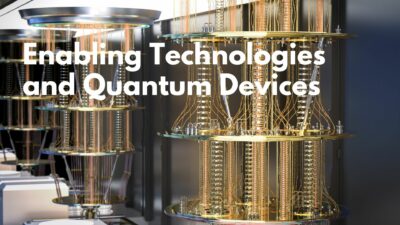
This article does not cover quantum computing standards, as it focuses instead on NIST’s development of ultra-sensitive detectors for studying the cosmic microwave background (CMB), the ancient light left over from the Big Bang. The core technology is a superconducting transition-edge sensor designed to capture individual photons. When cooled to near absolute zero, the sensor sits at a delicate balance between conducting and non-conducting states; absorbing even a tiny amount of heat from an incoming photon causes a measurable jump in electrical resistance, signaling detection. NIST also engineers the supporting electronics, including signal amplifiers and multiplexing systems that allow thousands of sensors to share data efficiently without overheating.
The technology is currently in active use across multiple past and ongoing astronomy projects, with continuous upgrades planned for future telescope arrays over the coming years. While not a quantum computing standard, its reliance on superconductivity could eventually inform advanced quantum sensing and ultra-precise measurement tools. By filtering out foreground interference like galactic dust, these sensors aim to detect faint polarization patterns in ancient light that may reveal how gravity and quantum mechanics interacted at the universe’s birth.
Source: https://www.nist.gov/measuring-cosmos/how-was-universe-born
Keywords: transition-edge sensors, cosmic microwave background, superconducting detectors